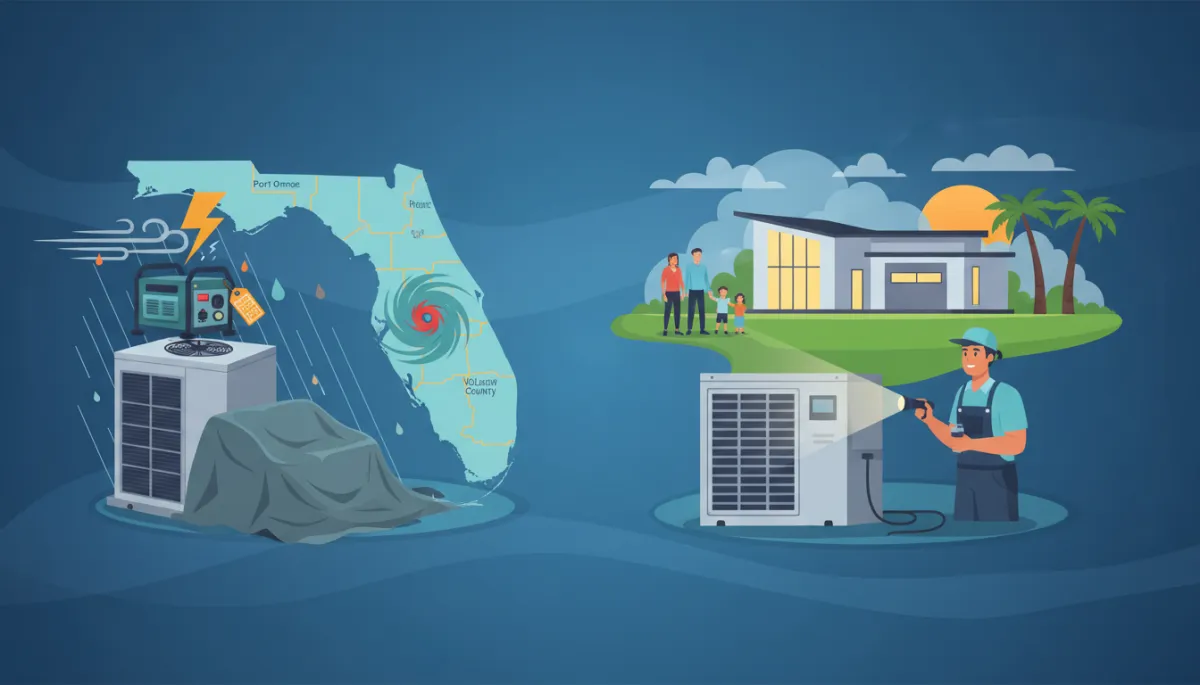
Hurricane-Season HVAC Checklist for Port Orange
Home Comfort, Hurricane HVAC, Storm Preparation
Hurricane-Season HVAC Checklist for Port Orange & Volusia County Homeowners
Living in Port Orange and across Volusia County means hurricane season is a yearly reality. A thoughtful Hurricane HVAC plan not only protects your comfort, it can also prevent costly damage when storms roll through the Atlantic. Use this storm preparation checklist to get your system ready early, stay safe when a storm is approaching, and know what to do after the winds die down.
Early in the Season: Build Your Hurricane HVAC Foundation
The best time to protect your HVAC system is long before the first named storm appears on the forecast. Early in the season, schedule a professional tune-up so a licensed technician can confirm your air conditioner or heat pump is operating safely and efficiently. According to national hurricane-preparedness resources, regular maintenance and securing outdoor units are two of the most important steps you can take before severe weather National Hurricane Center.
Service your system. Have coils cleaned, refrigerant levels checked, and moving parts inspected so your equipment is less likely to fail under stress.
Replace air filters. Clean filters improve airflow and reduce strain on the system, especially important when you are running it hard in hot, humid weather ahead of a storm.
Secure the outdoor unit. Use hurricane straps or metal brackets to anchor your condenser to a concrete pad and trim back trees and shrubs so branches and debris are less likely to cause impact damage.
Add surge protection. Power surges are common in Volusia County during lightning and grid disruptions. A whole-home or dedicated HVAC surge protector can help defend your system’s electronics from sudden voltage spikes.
If your home is in a low-lying or flood-prone area, talk with your contractor about elevating the outdoor unit to reduce the risk of water damage. Also take this time to seal and insulate ductwork, especially in garages or crawlspaces, to limit moisture intrusion during long periods of heavy rain.
When a Storm Is Approaching: Last-Minute Storm Preparation
As a tropical storm or hurricane moves toward the Port Orange coastline, shift from long-term planning to immediate Hurricane HVAC protection. Volusia County Emergency Management recommends securing outdoor items and preparing home systems before tropical-storm-force winds arrive (Volusia County Emergency Management) .
Cool your home in advance. Lower the thermostat a few degrees the day before the storm. If you lose power, your home will stay comfortable a bit longer.
Turn off the system before landfall. Once strong winds and lightning are close, shut down your HVAC at the thermostat and flip the dedicated breaker. This helps protect the compressor and electronics from power surges and sudden outages.
Secure loose objects. Bring in patio furniture, grills, and toys that could become projectiles and damage your outdoor unit or refrigerant lines.
💡 Pro Tip: Take quick photos of your HVAC equipment and surrounding area before the storm. They can be invaluable for insurance claims if damage occurs.
Generator Safety Tips: Stay Cool and Safe During Outages
Many Volusia County homeowners rely on portable or standby generators to keep essentials running, including air conditioning, during prolonged outages. However, improper use can be deadly. Follow these generator safety tips from the CDC, Red Cross, and Consumer Reports to protect your family from carbon monoxide and electrical hazards (CDC)
Always operate generators outdoors, at least 20 feet from doors, windows, and vents, with the exhaust pointed away from your home to prevent carbon monoxide buildup.
Keep the unit dry under a well-ventilated canopy, and never run it in a garage, carport, or enclosed porch.
Use heavy-duty, outdoor-rated extension cords and avoid overloading the generator. Prioritize essentials like refrigerators, medical equipment, and maybe a smaller HVAC or window unit rather than trying to power everything at once.
If you plan to power your central air system, have a licensed electrician install a transfer switch so your generator can safely connect to your home’s panel.
Make sure your home has working, battery-operated carbon monoxide detectors on every level, and review the manufacturer’s instructions for both your generator and HVAC system before hurricane season begins.
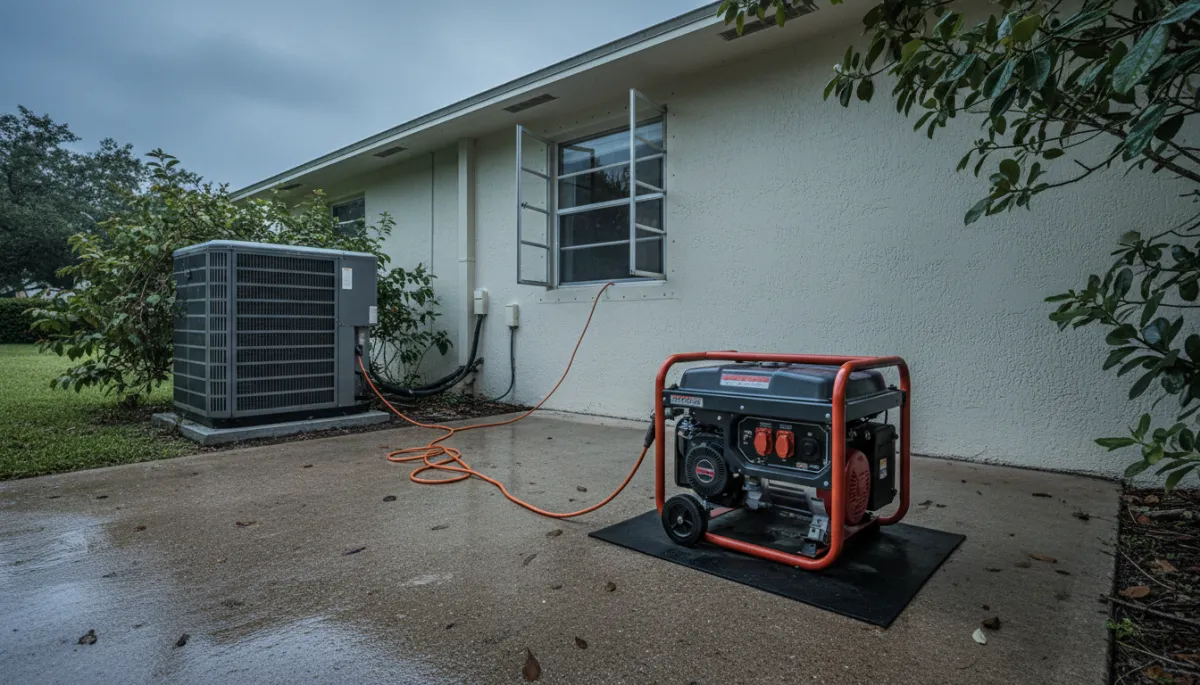
Safe generator placement can power essentials without risking carbon monoxide exposure.
After the Storm: First Checks Before You Restart
Once the storm has passed and it is safe to go outside, resist the urge to immediately switch your air conditioning back on. A careful, step-by-step approach can prevent further damage and keep your family safe.
Visually inspect the outdoor unit. Look for dents, bent fan blades, displaced panels, or debris lodged in the unit. Check that the unit is still level and that refrigerant lines appear intact.
Check for flooding. If the unit was submerged or standing water remains around it, do not restore power. Water inside electrical components can be extremely dangerous.
Clear debris. Remove leaves, branches, and windblown items from around the condenser so airflow is not blocked when you restart the system.
Post-Storm Inspection: When to Call a Professional
National post-storm HVAC inspection guidelines emphasize safety first: keep power off to damaged equipment and watch for electrical or gas hazards before attempting any restart. If you notice any signs of damage, strange smells, or hear unusual noises when the system comes back on, shut it down and contact a licensed HVAC technician right away.
Have a professional check electrical connections, capacitors, and contactors for storm-related damage or corrosion.
Ask them to inspect ductwork, especially in attics or crawlspaces, for water intrusion or early signs of mold growth, which can affect indoor air quality long after the storm has passed.
Replace or clean air filters again after the event; they often capture extra dust and debris stirred up during and after a hurricane.
Finally, use each hurricane season as a chance to improve your storm preparation plan. Consider upgrades like stronger mounting hardware, improved drainage around your pad, or even a more efficient system that can pair better with a backup generator. With a solid Hurricane HVAC checklist in place, Port Orange and Volusia County homeowners can face the next storm season with greater confidence, comfort, and peace of mind.